
Who Should Apply for a PG in Dance Movement Therapy? Artists, Healers, and Beyond
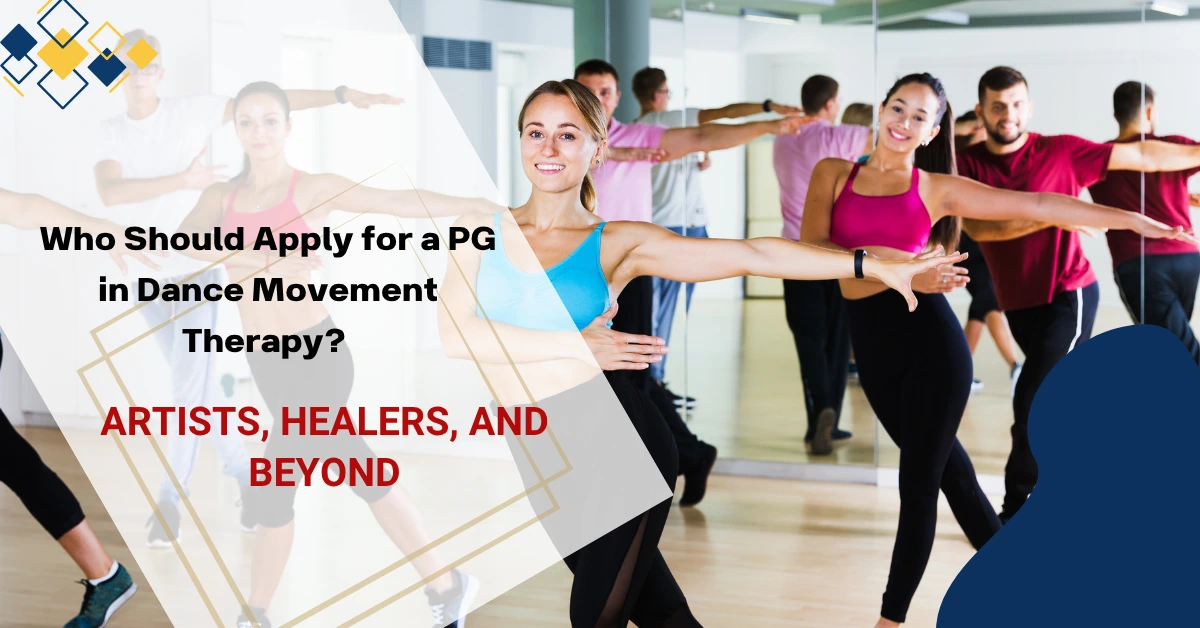
In this era, most of us are concerned both about physical and mental health and many alternative healing strategies are now gaining popularity. Among those Dance Movement Therapy (DMT) has worked as a powerful weapon in the arsenal that utilizes body movement and creative expressions for healing. But is this path for you? Should you consider enrolling in this course? If you are a dance lover, social worker, educator, Psychologist or curious to learn healing through creativity, then pursuing post graduation in Dance Movement Therapy can be a rewarding career for you.
What is Dance Movement Therapy?
Dance Movement Therapy or DMT is a psychotherapeutic practice that brings emotional, cognitive and physical integration. This therapy doesn’t involve perfect choreography or mastering in dance skills, rather it is used to express emotions, release trauma and recover from mental illness.
A dance movement therapy course comprises of somatic practices, theoretical psychology, expressive arts and supervised clinical work. This course trains students on therapeutic sessions to help others deal with stress, emotional challenges, developmental issue, and trauma. This therapy involves mindful and intentional movements.
Artists: Expressive Souls on a Healing Path
Are you an artist- a dancer, performer or actor? If yes, then PG in DMT will be an extension of your artistic career. Usually artists contain a deep sensitivity to emotions, in-depth connection with body and creativity to reveal body story with movements. Through dance movement therapy course, you can shape your skills into tools- not only for others, but for yourself too.
Many dancers love to follow a path that allows them to stay connected with their bodies while moving ahead towards a meaningful career. DMT has this rare blend. It gives an opportunity to make a career in dance therapy that goes beyond the studio or stage. Artists can work in rehab centers, hospitals, schools, NGOs and mental health clinics. Here at these places, movement works as a bridge between physical and emotional expressions.
Healers: Expanding Therapeutic Modalities
If you are into a healing profession- like a psychologist, occupational therapist, counselor, yoga teacher or physiotherapist- a Post Graduation in Dance Movement Therapy can streamline your career in right direction. Collaborating movement with talk therapy or bodywork provides comprehensive approach which traditional approach lacks.
Many healers feel that verbal communication is not enough. Trauma usually remains in our body. With the help of trained DMT practitioner patients can release their suppressed emotions through non-verbal communication. Through dance movement therapy course, healers can read their body language, facilitate group therapy through movement and gain somatic-based interventions for a long-term impact.
Educators and Special Needs Professionals: Movement as a Learning Tool
Teachers, those who are working with special need students, can learn the impact of movement on learning and emotional regulations. Children with autism, ADHD or development delays understand non-verbal communication in a better manner. Through dance movement therapy course, these professionals can know how dance movement can help their students in cognitive development and emotional expression.
With DMT, educators learn to maintain safe and emotionally attuned classroom for children. Including therapeutic movement in their daily activities, teachers can help students to build the self-awareness, social skills and ways to manage stress.
Social Workers and NGO Professionals: Body-Centered Trauma Work
Social workers or professionals working with individuals that have survived- domestic abuse, war refugees, or PTSD persons- can heal their body through DMT. It can be a satisfying moment for social workers to help someone get out of the trauma safely through intentional movement.
Through dance movement therapy course, social workers learn implementation of body healing techniques in their work. With the increase in awareness regarding trauma-informed care, dance therapy career scope has increased and DMT professionals can find good opportunities in humanitarian and development sectors. NGO professionals with PG in DMT can give their contribution in gender-based violence recovery programs, psychosocial interventions and mental health outreach initiatives.
Mental Health Enthusiasts and Career Changers: New Path, New Purpose
You might be working in a corporate, tech or any other field not related to dance therapy- but you always remain fascinated towards wellness, movement and healing. If so, then you are not alone. Many career changers choose expressive therapies because of greater dance therapy career scope. If you always wish to work in mental health but don’t want to go with traditional psychotherapy or medicine then this course is for you.
DMT course embraces everyone irrespective of their field. This course is for individuals that want to undergo personal transformation and help others in the same. This course doesn’t need any qualification related to dance or therapy. It comprises of foundational modules that will train you on clinical settings, movement analysis and let you work for the vulnerable populations.
What Does a PG Dance movement therapy course Involve?
This PG dance movement therapy course covers:
- Theoretical knowledge of human development, psychology and somatic practices.
- Dance analysis with experiential movement labs.
- Practical exposure in mental health and educational settings.
- Case studies and research projects.
- Group therapy sessions with personal process work.
This course is designed as per the international guidelines for DMT and it will take around 1-2 years to complete. Students get a chance to practice under licensed professionals.
Dance therapy career scope after Completing the course
The dance therapy career scope is currently increasing in India and other countries. After completion of PG in DMT, professionals can find a career in:
- Hospitals, clinics, wellness centers as a dance movement therapist.
- As a facilitators in special education, schools and early childhood programs.
- Rehabilitation centers and mental health institutions.
- NGOs, humanitarian organizations and trauma centers.
- Private practitioners conducting one-on-one or group sessions.
Final Thoughts: Is This Your Calling?
Pursuing a PG in dance movement therapy is a journey of healing, self-awareness, and meaningful contribution. If you give priority to creativity, emotional intelligence and body wisdom then this path can give you a rewarding career. Whether you are an artist, healer or a keen learner want to begin with something new, DMT welcomes you.
As the world is moving towards integrative health and mind-body medicine, the dance therapy career scope will open the gate of n
Tags:creative healing careers dance movement therapy course dance therapy career scope DMT for educators PG in dance movement therapy