Physiotherapy or Physical Therapy (P.T.) is a Movement Science with an established theoretical and scientific base and widespread clinical applications in the Prevention, Restoration & Rehabilitation, Maintenance and Promotion of optimal physical function. Physiotherapists diagnose and manage movement dysfunction and enhance physical and functional abilities. This physical dysfunction may be the sequelae of involvement of any of the systems like Musculoskeletal, Neurological, Cardiovascular, Respiratory or other body systems.
These practitioners contribute to society and the profession through practice, teaching, administration, and the discovery and application of new knowledge about physiotherapy experiences of sufficient excellence and breadth by research to allow the acquisition and application of essential knowledge, skills, and behaviors as applied to the practice of physiotherapy.
Learning experiences are provided under the guidance and supervision of competent faculty, in both, classroom as well as in clinic. The designed curriculum will prepare the entry-to-practice physiotherapist (PT), to be an autonomous, effective, safe and compassionate professional, who practices collaboratively in a variety of healthcare set ups such as neonatal to geriatric, from critical care to community fitness to sports training and is responsive to the current and future needs of the healthcare system.
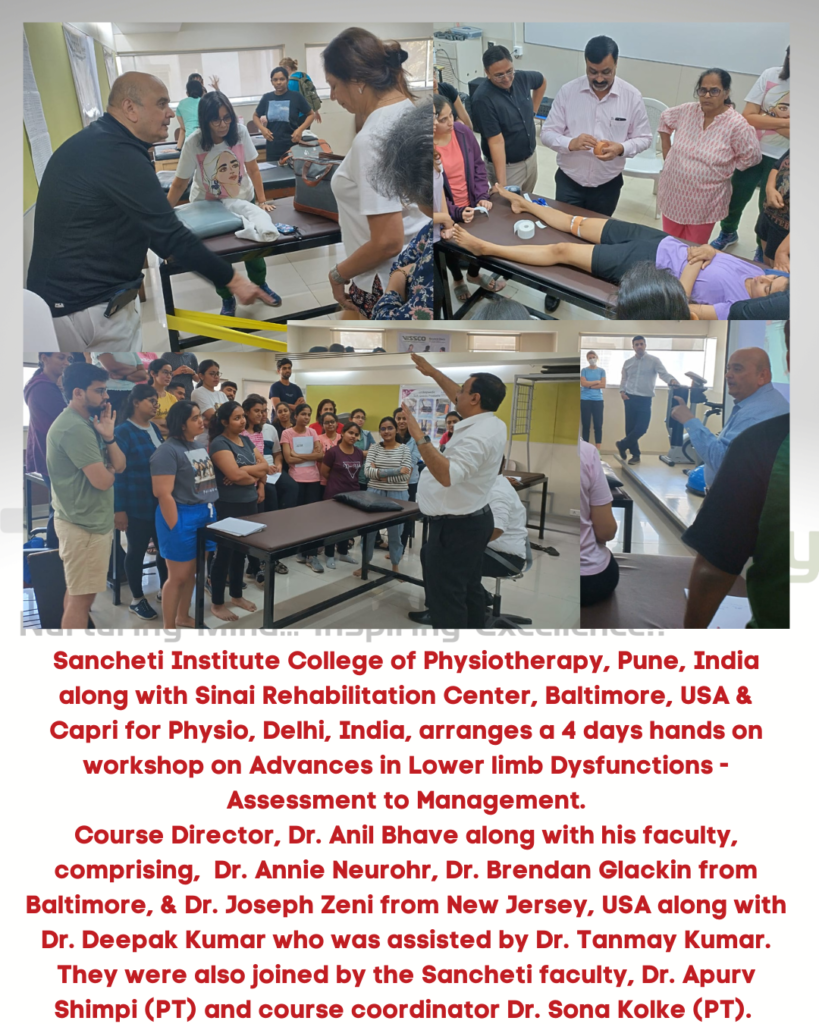
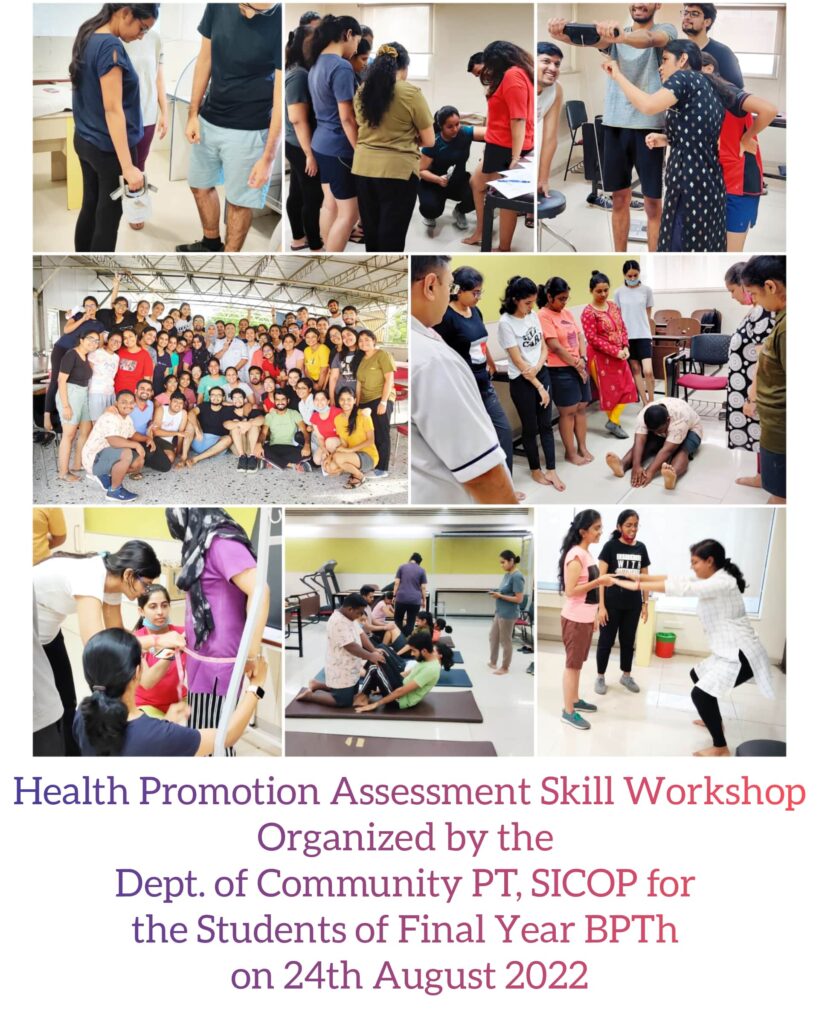
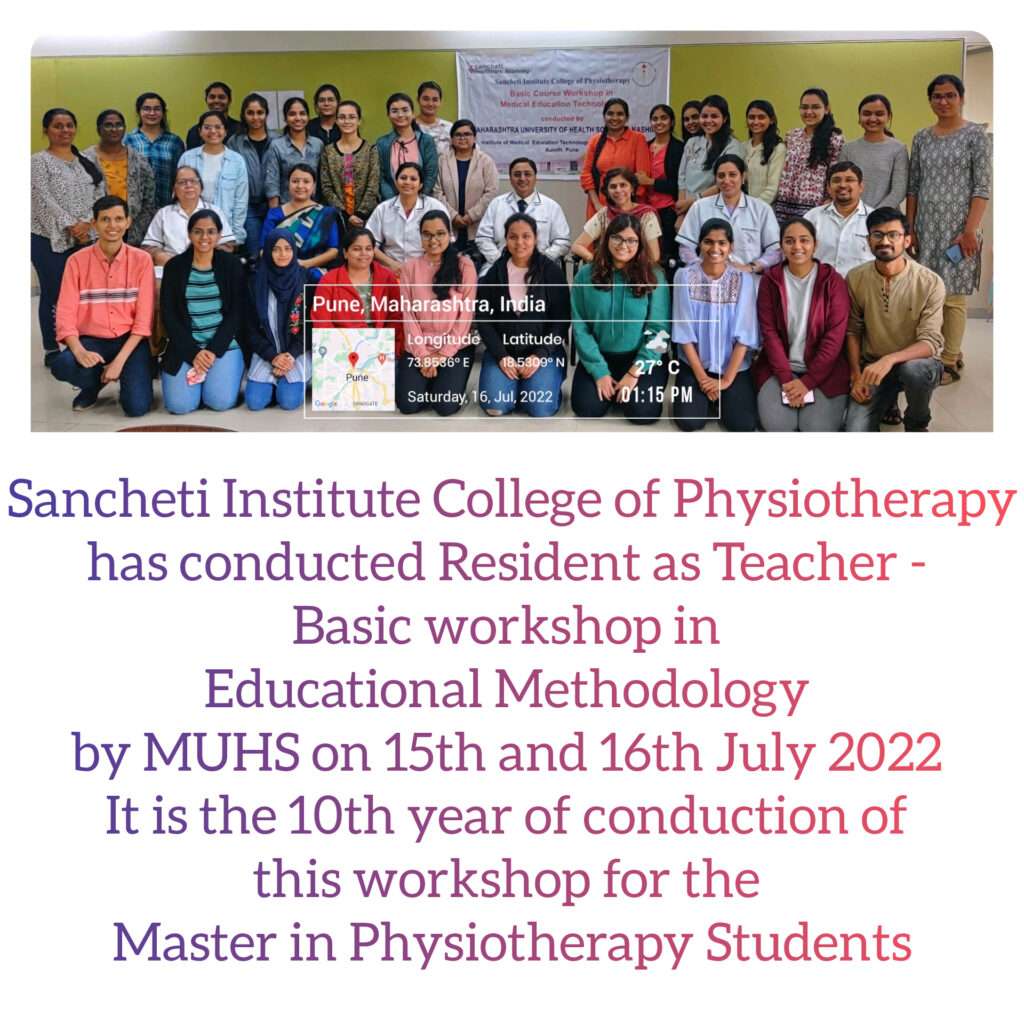
The Master’s degree in Physiotherapy is a two-year full time program consisting of classroom teaching, self-academic activities and clinical postings, with self-directed evidence based practice. In the first year, the theoretical basis of physiotherapy is refreshed along with research methodology, biostatistics & teaching technology. The students are rotated in all areas of clinical expertise including their specialty during this period. They are required to choose their study for dissertation and submit a synopsis. During the second year the students will be posted in their area of specialty. They are required to complete and submit their dissertation. The learning program includes seminars, journal reviews, case presentations, case discussions and classroom teaching. Some of the clinical postings may be provided at other reputed centers in the country in order to offer a wider spectrum of experience. The students are encouraged to attend conferences, workshops to enhance their knowledge during the course of study. University examinations are held at the end of first year and at the end of second year.